Telega - мессенджер и звонки
- 4.9
- Rating
- 1.00M
- Installs
- Free
- Price

 Analysis by App-foxy
Telega - мессенджер и звонки is the kind of communication app I would consider when I want a straightforward way to chat and make calls without building my daily routine around a more familiar international service. My overall impression is positive: it focuses on the basics people actually use, including chats, voice calls, and video calls, while keeping the experience approachable. It is free, available for Android, and developed by AO Telega.
That simple focus is also the app’s main appeal. I did not approach it as a replacement for every communication platform at once. I looked at it as a practical messenger for conversations with friends, relatives, classmates, or small groups where the priority is being able to reach people easily. The result is a useful option, although it is not automatically the best choice for every user or every type of communication.
How Telega feels in everyday communication
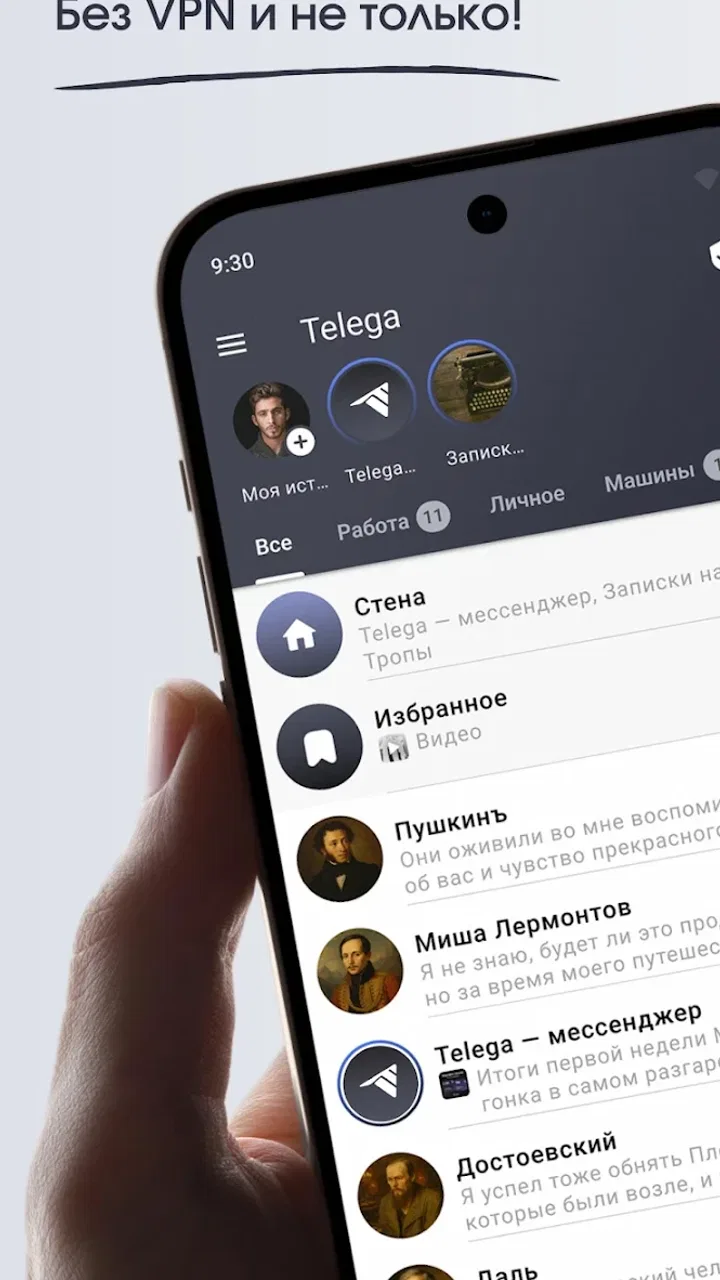
The first thing I noticed is that the app presents itself as a familiar messenger rather than trying to turn communication into a complicated social platform. The store summary emphasizes communication without a VPN, along with chats and video calls, and that gives a good idea of its intended role. You open it to talk, not to browse an endless feed or manage a large collection of unrelated tools.
You May Also Like

 Blood Strike: 2.5 Anniversary
Blood Strike’s Loadouts Turn Every Drop Into a Tactical Gamble
A close look at Blood Strike’s custom loadouts: how fast access to signature weapons reshapes its battle royale rhythm, rewards preparation, and narrows the gap between fights.

 Pandora - Music & Podcasts
Pandora’s Music Is Easy to Start, but Harder to Recover
Pandora’s strength is its low-effort path from a seed to a station. Its weak spot is how much confidence it asks you to place in connection, setup, and quiet recovery.

 8 Ball Pool
 Is Built on Rivalries, Rematches, and Routine
A close look at the rivalries, rematches, shared routines, and unanswered safety questions that turn a quick pool match into a persistent mobile community.

 Samsung Music
’s Quiet Strength Is Playing What You Already Own
Its reach comes less from spectacle than from dependable access to a personal library. That simplicity is both the app’s strongest retention engine and its ceiling.

 AccuWeather: Weather Radar
AccuWeather Review: A Quick, Clear Forecast for Everyday Decisions
For everyday plans, the best forecast is the one you can understand quickly. AccuWeather makes rain timing, radar, and local conditions easy to act on, with a few trade-offs.

 Hill Climb Racing
Why Hill Climb Racing Still Turns Crashes Into One More Run
A tiny car, a bumpy hill and one more upgrade: Hill Climb Racing keeps resurfacing because its simple chaos makes every near-miss feel personal.
More From Our News Desk



In practical use, that makes the app easy to understand. A new user can approach it with the expectations they already have from other messengers: find a conversation, send a message, and move to a call when typing is inconvenient. That familiarity matters when recommending an app to family members who may not want to learn a completely different interface.
I also appreciate that the product name shown in the store is Telega - мессенджер и звонки, while the short store description simply identifies it as Telega. The longer name is more useful because it immediately explains the central purpose. This is not a productivity suite pretending to be a messenger; it is a communication app built around conversations and calls.
For a normal day, I can imagine using it in several small but realistic ways. A family group could handle quick updates, a friend could start a video call instead of sending a long explanation, and a remote study group could use chat for coordination before switching to a call. The important advantage is not a flashy extra feature. It is the reduced friction between deciding to contact someone and actually doing it.
Calls are the reason to look beyond ordinary chat
Many messaging apps can send text, but the usefulness of Telega depends more heavily on its calling side. Voice calls are helpful when I am walking, cooking, or dealing with a subject that would become confusing in a long text exchange. Video calls are more personal and can be useful for family conversations, informal meetings, or checking in with someone who is far away.
I would especially consider it for people who want one place for both written and face-to-face communication. Moving from chat to a call keeps the conversation together instead of forcing me to switch between a separate messaging service and a separate calling tool. That sounds like a small convenience, but it makes a difference when the conversation changes direction quickly.
There is also a useful workflow for people who are not comfortable with video from the beginning. Start with a text message, continue with a voice call if the topic needs more detail, and use video only when seeing the other person adds something. Treating those as different levels of contact makes the app easier to introduce to less confident users. They do not have to jump straight into a video conversation.
At the same time, I would not judge the application only by the presence of a video-call button. A call is valuable when the other person is also reachable through the same service and when both sides find the experience comfortable. That means the app’s real usefulness can depend on whether the people I need to contact are willing to install and use it.
The strongest practical advantage is simplicity
Telega is most convincing when I keep the task narrow: communicate with people who already use it or are open to trying it. The lack of obvious clutter helps it feel less demanding than platforms that combine messaging with channels, public content, media discovery, payments, and many other activities.
This simplicity can be particularly helpful for a shared family setup. One person may only want to read messages, another may prefer voice calls, and someone else may use video regularly. A focused messenger gives each of them a clear starting point. I would still spend a little time helping a first-time user find conversations and call controls, but the learning curve should feel less intimidating than that of a feature-heavy platform.
Another non-obvious strength is the possibility of separating communication habits. If I use one service for public communities and another for personal conversations, Telega can serve as a quieter place for direct contact. That separation will not matter to everyone, but it can reduce the feeling that private conversations are mixed into a much larger stream of content.
What the current version tells me
The current version is 2.3.3, and the app requires Android 7.0 or later. That makes it accessible to people who are not using the newest phone, which is important for a family messenger. Someone with an older but still functional Android device may be able to join without replacing their phone simply to keep in touch.
Telega has been available since April 22, 2025, so I see it as a relatively young option rather than a service with a long-established history. That does not make it a bad choice, but it changes how I would recommend it. I would be comfortable testing it for everyday conversations, while a business or community that depends on years of accumulated tools and established habits might prefer a more mature alternative.
The app is free, which removes the main barrier to trying it. A person can install it and decide whether it fits their contacts without making a financial commitment. Still, “free” does not mean there is no practical cost: convincing friends, relatives, or colleagues to adopt another messenger takes time, and that social effort can be more important than the download itself.
Where the experience may fall short
My main reservation is not about the basic idea. It is about the uncertainty that naturally comes with choosing a newer communication service. Established messengers benefit from broad adoption, familiar routines, and years of user expectations. Telega has to earn that same level of trust and habit one conversation at a time.
This creates a network-effect problem. If only a few people in my contact list use the app, I may still need another messenger for everyone else. In that situation, Telega becomes an additional communication tool instead of a replacement. That can be worthwhile for a particular group, but it is less convenient than using the single service where all my contacts already are.
I would also be cautious about recommending it as the only communication channel for important work before a team has tried it together. A casual family call and a professional workflow have different requirements. A business may need a broader set of collaboration features, established administration practices, or integrations that are not central to Telega’s presentation as a messenger for chats and calls. For work, I would test it with a small group first rather than moving everyone immediately.
Video calls bring their own practical friction. They require both participants to be comfortable with video, and a poor moment for one person can make the feature less useful than a voice call or a text message. I find it better to treat video as an option rather than the default. For quick questions, chat is often faster; for complicated explanations, voice may be enough; for personal conversations, video can add warmth.
There is also a social limitation that cannot be solved entirely by interface design: people may resist installing a separate app when their existing messenger already works well. If I recommend Telega to a friend, I need a clear reason, such as a particular group wanting to communicate through it or a preference for its direct focus. “It is another messenger” is not a strong enough argument on its own.
Useful ways to decide whether it fits
I would begin by identifying the people who matter most. If my family, friends, or local group are already interested, the app becomes much more useful immediately. If nobody I need to reach is prepared to use it, the free price and simple design do not solve the central problem.
Next, I would test the three communication modes in a sensible order. I would send ordinary messages first, then try a voice call, and only afterward use video. This makes it easier to see which part of the app actually improves my routine. It also avoids judging the entire service based on one type of interaction.
A helpful habit is to agree on a preferred contact method within a group. For example, chat can be used for short updates, voice for urgent explanations, and video for planned conversations. This small agreement prevents a group from becoming noisy and makes the app feel more organized without requiring complicated settings or formal procedures.
I would also keep a backup means of contact during the first stage. That is not a criticism unique to Telega; it is sensible whenever a group adopts a new communication tool. If one person has trouble joining a call or has not yet checked the app, an existing channel can prevent a missed appointment or an important message from being lost.
Who should choose it, and who should skip it
Telega is a good fit for someone who wants a free, focused messenger for chats and calls, especially when the people they communicate with are willing to join. It should also suit Android users with older devices, since Android 7.0 is enough to run the current version. Families, small informal groups, and users who prefer a direct communication tool are the audience I would consider first.
The app may also appeal to people who want to try a messenger presented around communication without a VPN. That point is part of its identity, but I would still judge it by actual usefulness in my own contact circle rather than by the slogan alone. The best reason to use it is that it makes a needed conversation easier, not simply that it offers a different name in the app drawer.
I would skip it, at least for now, if all my contacts are firmly committed to another platform and do not want a second one. I would also look elsewhere if I need a deeply established professional ecosystem, extensive collaboration tools, or a service chosen primarily for a large existing community. In those cases, a mature alternative may be more convenient even if Telega feels cleaner.
The audience rating is Teen, so I would not treat the app as a child-focused communication product. For teenagers and adults, that rating is unlikely to be a concern, but families should still decide how they want younger users to communicate online. The app’s communication purpose does not remove the need for ordinary digital-safety conversations at home.
My verdict after weighing the trade-offs
Telega is a promising communication app with a clear purpose: keep chats, voice calls, and video calls in one accessible place. I like its focused approach, its free entry point, and the fact that it can work on devices running Android 7.0 or later. The app is easiest to recommend when a particular group is ready to use it together.
Its biggest weakness is equally clear. A messenger is only as useful as the people available on it, and a newer service may not yet fit into everyone’s existing habits. That can leave me maintaining two communication apps, which reduces the convenience Telega is trying to provide. I would not present it as an automatic replacement for every familiar alternative.
After considering both sides, I would recommend it to friends who want a straightforward option for personal conversations and calls, especially if they value a less crowded communication experience. I would suggest trying it with one real group rather than installing it without a plan. If that group finds the chat-to-call workflow comfortable, Telega can become a practical daily messenger.
The strong public response is encouraging: the app holds a 4.9 average from around 81 thousand ratings and has passed one million installs. Those figures suggest that many people are finding value in it, while the developer, AO Telega, continues to present it as a dedicated communication product. My final view is favorable but measured: Telega is worth trying when your contacts are ready to meet you there, but its usefulness should be proven through your own conversations rather than assumed from its feature list.
FAQs for Telega - мессенджер и звонки
01What features does Telega offer for messaging and calls?
Telega provides a comprehensive suite of features for both messaging and calls, including text messaging, voice and video calls, file sharing, and group chats. It also offers end-to-end encryption for added security, customizable themes, and a variety of stickers and emojis to enhance your communication experience.
02Is Telega secure and private for users?
Yes, Telega emphasizes user security by offering end-to-end encryption for messages and calls, ensuring that your communication remains private. Additionally, the app allows users to set up two-step verification and offers advanced settings to control who can contact you or view your profile, enhancing overall privacy.
03Can I use Telega across multiple devices?
Absolutely! Telega supports multi-device usage, allowing you to access your messages and calls from any device seamlessly. Whether you're using a smartphone, tablet, or desktop, your conversations remain synchronized, ensuring you never miss an update or important call.
04Are there any costs associated with using Telega?
Telega is free to download and use for basic messaging and calling features. However, it may offer in-app purchases or premium features that come with a cost. Users should check the app store for any additional expenses related to enhanced functionalities or ad-free experiences.
05How user-friendly is Telega for new users?
Telega is designed with user-friendliness in mind, featuring an intuitive interface that makes navigation straightforward for both new and experienced users. It includes helpful tutorials and tips for onboarding, ensuring that even those new to messaging apps can quickly become familiar with its features.
Pros
- Intuitive and user-friendly interface.
- High-quality voice and video calls.
- Secure end-to-end encryption.
- Supports multiple languages.
- Customizable notification settings.
Cons
- Can be resource-intensive on devices.
- Limited customization for themes.
- Occasional connectivity issues.
- Requires continuous updates.
- No offline message access.

Telega - мессенджер и звонки
Gallery